
Attendance after hours: $80–$180
The figure that gets a licensed plumber to your door at night. Quotable on the phone, every time.
The first thing that happens is not a booking. It is a plumber telling you what to shut off right now, because the minutes before anyone arrives are where most of the damage is either done or prevented.
Most of the value in an emergency call happens before anyone arrives. Knowing to shut the water off at the meter, knowing not to touch a light switch when there is a smell of gas, knowing to kill the power to a soaked area: each of those is worth more than the hour we save on the road.
So the call starts with instructions rather than a booking form. Then a crew is dispatched with the common failure points already on the van, because diagnosing from scratch at midnight is how a two-hour job becomes a two-visit one.


The slowest part of an apartment emergency is often not the plumbing — it is the door. Fob access, a basement that needs a resident to open it, a car park with no after-hours entry: any of those can add half an hour while water is still running.
Waterfront apartment blocks share sewer and stormwater lines, so one blockage needs a camera and the right access to clear the whole run.
Two things worth doing before you ever need them: find your lot's isolation valve — usually in the laundry or a hallway cupboard — and save the building manager's after-hours number in your phone. Both take five minutes on a calm evening and both save real time on a bad one.
Canada Bay’s flat, foreshore blocks near the Parramatta River sit low, so heavy rain overwhelms stormwater pits and backs water up fast.
Heavy rain arriving on a high tide is the combination that fills yards near the water. Stormwater that normally drains away has nothing to drain into, so it backs up through the pits instead — which is why a blocked line around here shows itself in the garden long before it shows itself indoors.
If your yard has filled more than once, the pit is telling you something. Clearing it during the storm is emergency work; finding out why it filled is a twenty-minute camera run on a dry day, and considerably cheaper.
Canada Bay sits on the Parramatta River in Sydney’s Inner West (postcode 2046), a waterfront suburb wrapped by the Bay Run and bordering Five Dock, Concord, Drummoyne and Russell Lea. From established brick homes on the low-lying flats to the newer waterfront apartments along the foreshore, its drains cop everything the river throws at them, and we know the local ground well.
A yard that floods in every serious downpour is a different problem from one that flooded once in a freak storm. The first is a blocked or undersized line and it will keep happening; the second is weather.
Telling them apart takes a camera on a dry day, not a guess in the rain. If it has happened twice, book the inspection between storms — clearing a surcharging pit at the height of it costs more and tells you less.
An after-hours visit is about making it safe and usable: clear the blockage, get the fixtures working, and stop anything overflowing. That is nearly always achievable.
What does not happen at midnight is a structural repair. If the camera shows a cracked or root-filled run, you will hear that on the night with the options, and the actual fix is booked in daylight when it can be done properly.
In a block, a single blockage low in the stack shows itself in whichever apartment sits lowest — which is frequently not the apartment that caused it. If your ground-floor shower is backing up when the neighbours run water, the line is telling you the problem is downstream of all of you.
That is worth knowing before anybody starts apportioning blame or cost. A camera up the stack settles it in twenty minutes, and the footage is what the strata manager needs to act on rather than a description of what somebody saw.
Ground close to the water holds more of it, sits lower, and moves more than ground further up. Over decades that shows up in the drainage as joints that have opened slightly, falls that have flattened, and lines that silt where they once ran clean.
Many original homes around the bay still run old earthenware and cast-iron pipes that crack and corrode after decades near the water.
None of that is an emergency by itself. It is the reason an emergency here often turns out to be the last stage of something that has been developing quietly, and why the camera run after the clear is worth more than the clear.
Clay drainage is laid in short lengths, so a single run has a great many joints, and after decades each one has opened a fraction. The line copes fine at normal flow and stops coping the moment demand spikes, which is why so many of these calls come on a weekend morning or after a full house has been showering.
Clearing restores flow the same night. Whether it holds depends on what the camera finds, and that is worth doing before the next long weekend rather than after it.
The figure that gets a licensed plumber to your door at night. Quotable on the phone, every time.
Business hours run about $120–$160. The premium is real and every genuine after-hours outfit charges one.
Attendance plus the first stretch of work plus minor parts. An isolated burst, a blocked toilet, a failed valve.
Slab leaks, gas faults, anything structural at 2am. Quoted before it starts, in writing.
The cheapest outcome, and one we give often. Describe it honestly and we will tell you which side of the line it is on.
The price is agreed before work starts, including at 2am. Figures here are indicative of the 2026 Sydney market rather than a quote from us, you get your own number as a fixed price before any work starts.
Before any booking, the person on the phone tells you what to isolate. That call is where most of the damage is either prevented or done.
You are told when someone can actually be there, not a number designed to keep you on the line. If that is ninety minutes, it is ninety minutes.
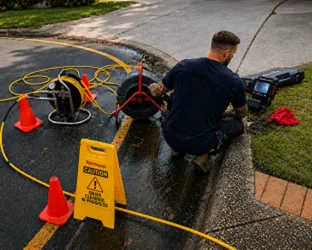
Stop the water, make the area safe, find the cause. Only then does a price get put in front of you, and nothing starts until you have agreed it.

Finished on the night wherever the parts allow. Where they do not, you are left watertight and usable, with the return booked before we leave.
Describe what it is doing and we will tell you honestly whether it needs a van now or costs less on Monday.
Phone is quickest at night. The form works too and reaches the crew covering Canada Bay rather than a national call centre.

Leave your details and our local Canada Bay team will call you back fast.